

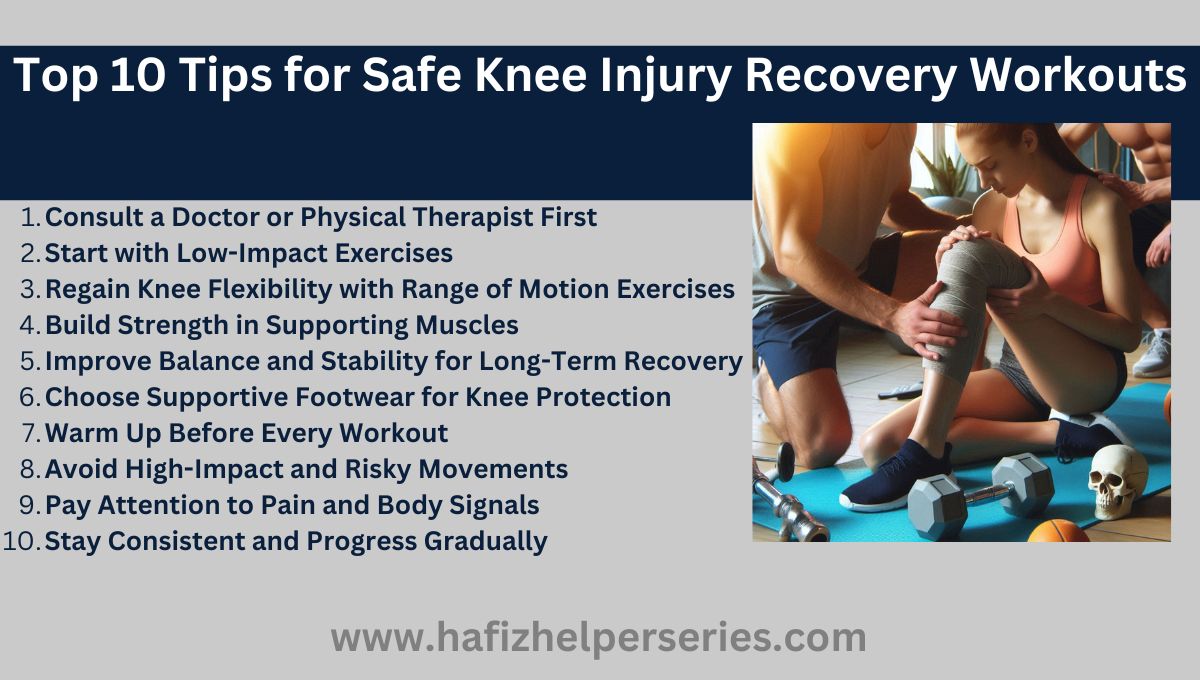
Top10 Tips for Safe Exercises after knee injury Recovery Workouts: Exercises after knee injury
Recovering from a knee injury can be a long and challenging journey, but with the right approach, you can successfully regain strength, mobility, and confidence in your knee. Whether you’ve had a sprain, ligament tear, or meniscus injury, returning to exercise requires patience and caution. Here are the top 10 tips for safe knee injury recovery workouts.
1. Consult a Doctor or Physical Therapist First
Before embarking on any exercise routine, it is essential to get medical clearance from your doctor or physical therapist. Each knee injury is unique, and it’s crucial to understand the severity of the damage before beginning any physical activity. Your doctor can assess your injury and recommend the most suitable rehabilitation program. Physical therapists are trained to guide you through specific exercises tailored to your condition, ensuring you’re not doing too much too soon, which could lead to reinjury.
Additionally, a professional assessment will help identify any imbalances or weaknesses that may have developed due to the injury, allowing for a more comprehensive recovery plan. Your therapist may also advise on specific modifications to standard exercises or offer additional treatments such as ice therapy, massage, or ultrasound.
2. Start with Low-Impact Exercises
When reintroducing exercise after a knee injury, starting with low-impact activities is critical to avoid placing excessive stress on your knee. Low-impact exercises allow you to rebuild strength, mobility, and endurance while reducing the risk of further injury. Walking, swimming, and stationary cycling are excellent starting points. These exercises help maintain cardiovascular fitness and muscular endurance without putting undue strain on your knee joint.
Swimming, for instance, is a great way to get your body moving without putting any pressure on your knee. The buoyancy of the water supports your weight, reducing the impact on your knee while still allowing for effective movement. Similarly, stationary cycling can help improve knee mobility and strength without putting stress on the joint, especially if you keep the resistance light at first.
3. Regain Knee Flexibility with Range of Motion Exercises
One of the first steps in knee recovery is regaining flexibility and range of motion in the joint. Limited flexibility can hinder recovery and increase the risk of further injury. Range of motion exercises, such as heel slides, seated knee extensions, and gentle leg lifts, are essential to restore the natural movement of your knee.
Heel slides: While lying flat on your back, slowly slide your heel toward your buttocks, bending your knee gently. Then, slide your heel back down. Repeat this motion slowly to improve joint flexibility.
Seated knee extensions: Sit in a chair with your feet flat on the floor. Slowly extend your injured leg straight out in front of you and hold for a few seconds, then lower it back down. This will help improve knee extension, which is vital for walking and standing.
Performing these exercises multiple times a day will gradually increase your knee’s flexibility and restore normal movement patterns.
4. Build Strength in Supporting Muscles
To ensure long-term knee health, you must strengthen the muscles surrounding your knee. The quadriceps (front of the thigh), hamstrings (back of the thigh), and calf muscles play a crucial role in stabilizing the knee joint and preventing future injuries. Targeting these muscles can provide the support your knee needs during rehabilitation.
Exercises like straight leg raises (where you lift your leg while keeping it straight) and mini squats (where you squat to a shallow depth) are effective for strengthening the muscles around the knee.
Start with light resistance and increase gradually as your knee improves. A gradual increase in intensity helps avoid straining the muscles or overloading the knee joint.
Building muscle strength in your thighs and calves also helps distribute the weight more evenly during movement, reducing stress on the knee itself.
5. Improve Balance and Stability for Long-Term Recovery
Balance and stability exercises are essential for full recovery, as knee injuries often affect proprioception (the body’s ability to sense its position in space). Improving your balance and stability will not only help you regain control over your knee but also prevent future falls and injuries.
Incorporate exercises like single-leg stands, where you stand on one leg for a set amount of time, and step-ups, where you step onto a low platform one leg at a time. Both exercises challenge your knee’s ability to stabilize your body weight. Progress slowly, adding more time or height as your stability improves. Stability exercises also engage your core muscles, which play a role in overall body control.

6. Choose Supportive Footwear for Knee Protection
Proper footwear is crucial for knee injury recovery. Wearing the wrong shoes can alter your gait and place unnecessary stress on your knees. Choose shoes with good arch support, cushioning, and shock absorption. Avoid flat shoes or high heels, as they can cause imbalance and increase strain on your knees.
If your doctor or therapist recommends it, you may also benefit from using custom orthotics or shoe inserts designed to support your feet and knees during movement. Good footwear minimizes the risk of reinjury and promotes healthy, natural movement.
7. Warm Up Before Every Workout
Warm-up exercises are essential for preparing your muscles and joints for physical activity. A proper warm-up increases blood flow to the muscles, loosens the joints, and reduces the likelihood of injury. Before any workout, engage in light aerobic exercises such as walking or cycling to get your heart rate up. Follow this with gentle stretches, focusing on the muscles surrounding the knee.
Incorporating dynamic stretches like leg swings or lunges can improve flexibility and mobility, ensuring that your muscles are primed for more strenuous activity.
8. Avoid High-Impact and Risky Movements
While it’s tempting to jump back into intense workouts, it’s important to avoid high-impact activities until your knee is fully healed. Running, jumping, or performing deep squats can put undue stress on the knee joint and may cause a setback in your recovery. Stick to exercises that are less demanding on your knee, and gradually increase intensity as your strength and flexibility improve. Exercises after knee injury
Sports like basketball, soccer, and running should be avoided early in the recovery process. It’s best to engage in these activities only when your doctor or physical therapist gives you the green light.
9. Pay Attention to Pain and Body Signals
One of the most important aspects of knee injury recovery is listening to your body. While some discomfort during exercise is normal, sharp pain is a red flag. If you experience any pain that feels sudden or intense, stop immediately and rest. Continuing to push through pain could cause further damage to your knee.
It’s important to distinguish between muscle soreness, which is a normal part of recovery, and pain, which could indicate an injury or strain. If pain persists, consult your doctor or physical therapist for further evaluation.
10. Stay Consistent and Progress Gradually
Recovery takes time and patience. Consistency is key when it comes to rebuilding strength and flexibility in your knee. Stick to your prescribed exercises and recovery plan, and don’t rush the process. Progress may be slow, but with dedication, you’ll eventually regain full function of your knee.
Increase the intensity and duration of your workouts gradually. Start with easy exercises and gradually progress to more challenging ones as your knee becomes stronger. Overloading the knee too soon can result in setbacks, so it’s essential to listen to your body and progress at a pace that feels right.Exercises after knee injury
Conclusion
Returning to exercise after a knee injury requires a balanced and mindful approach. By following these tips, you’ll ensure a safe and effective recovery process. Remember to consult your healthcare provider, start slow, listen to your body, and prioritize strengthening and stability. With patience and consistency, you’ll get back on your feet and achieve long-term knee health.
READ MORE: Role of Physical Therapy in Our normal Life

